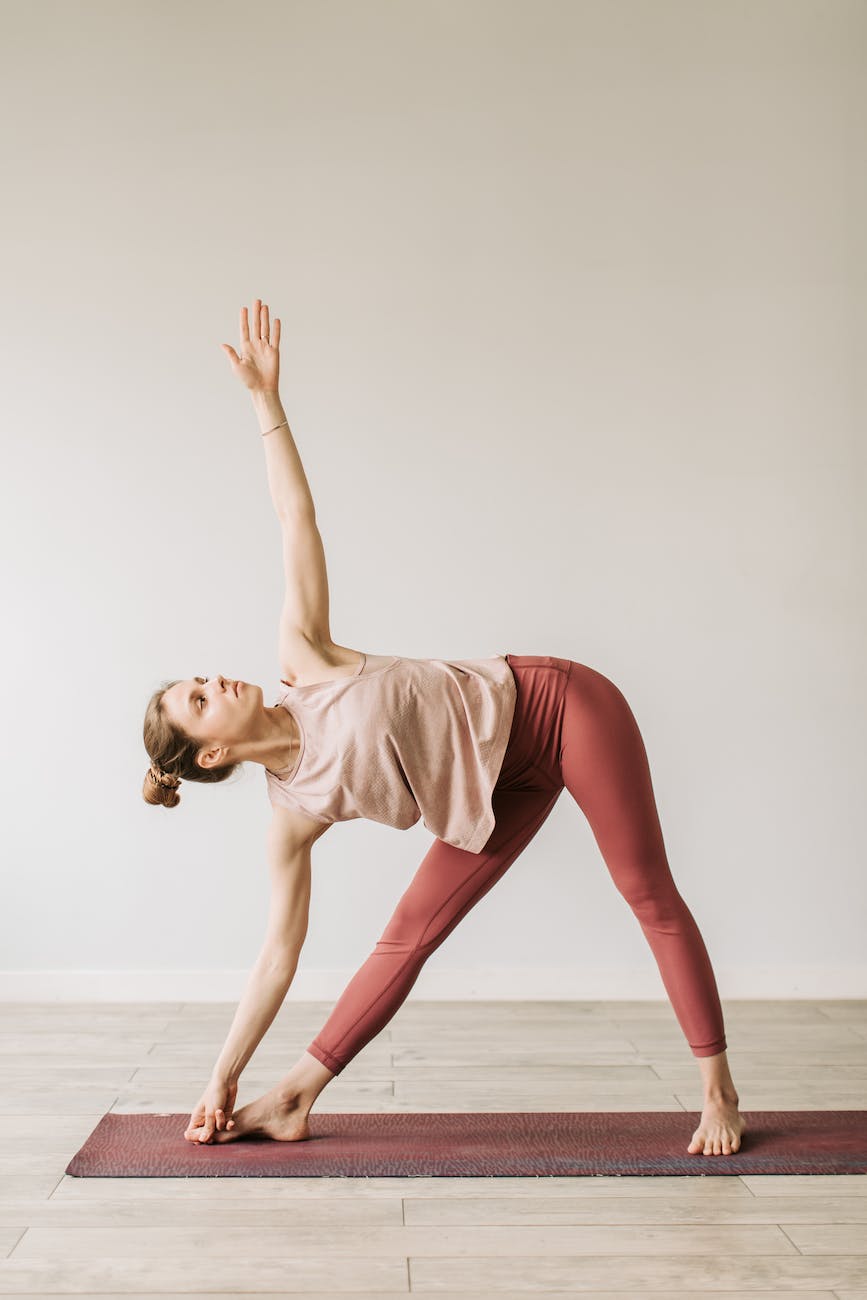
Photo by Vlada Karpovich on Pexels.com
Who never got confused with all the yoga variations available in the market? This post will help you to understand the differences and figure out what type of yoga is best for you.
Most of my British friends already tried “Hot Yoga”, which I know is not for me even before considering a class. This is what happens: you take the class in a warm room, at around 40 degrees Celsius or 105F (more on it below).
They all say it is great – the heat loses muscles and accelerates heart rate, which makes the workout more intense. But no. I will not take myself to exercise in a “sauna”.
But I like yoga! There are many other options, I tested a few, and some made me feel very well. Want to try? Check here what is the most recommended type for you.
Yoga variations
Classical yoga, called Raja Yoga, includes 8 types of practice (sutras or limbs):
- the postures or poses (asanas)
- moral discipline (yamas)
- observances or self-discipline (niyamas)
- breathing practices (pranayama), self-awareness (pratyahara)
- effortful concentration (dharana)
- effortless concentration or meditation (dhyana)
- enlightenment (samadhi)
Most Western Yoga classes focus only on poses or postures (asanas). By the way, one of the most common terms in the area, Hatha, technically speaking means simply physical yoga, thus, asanas.
Some Yoga styles, like the fast-paced Ashtanga, include breathing practices (pranayama).
And just a few, like Kundalini, include also meditation (dhyana).
But the most important is to start with the end in mind. What is your main purpose, relax, sweat, or connect to the divine?
If you want to relax…
You can start with the classic Hatha Yoga. Hatha means simply the physical practice of yoga, meaning the asanas (poses or postures) themselves.
Technically, every form of Yoga practiced in the Western countries is based on Hatha.
As the Yoga styles evolved, the term Hatha Yoga became the synonym for gentle yoga classes, focused on the poses themselves and with limited flow (movement).
Yyengar Yoga is a variation of Hatha that focus on alignment and precision.
To help you to achieve the perfect pose, many props are used in this style, such as yoga blocks, blankets, straps, and rope walls.
Props are also used in Restorative Yoga, which also focuses on poses but cares more about relaxing and flexibility, and less on precision.
Restorative Yoga has more movement than the previous styles, but the movements are slow, aiming to help you to relax.
It will feel like you are not doing much and this is exactly its goal. A great type of yoga for helping people who struggle with anxiety and insomnia.
Another very relaxing style is Yin Yoga, which helps to learn the basics of meditation and calming the mind while preparing the body to sit in long meditation sessions.
It is a meditative practice, formed by seated postures that aim to restore the body’s length and elasticity.
If you want to sweat…
When poses are mixed with a lot of movement, you get 2 of the most popular Yoga styles: Ashtanga and Vinyasa (also known as Vinyasa Flow, Flow Yoga, or Dynamic Yoga).
Ashtanga was developed in the 1960s and has the first type of yoga largely adopted by Western practitioners.
It is formed by a series of poses that are performed always in the same sequence, in a very fast-paced way, punctuated by breathing and half sun salutation (flow sequence of 12 asanas) to keep up the pace.
Vinyasa Yoga (also known as Vinyasa Flow, Flow Yoga, or Dynamic Yoga) is influenced by Ashtanga, but it is even more vigorous.
The flow from pose to pose is continuous, almost like a dance. It is perfect for HIIT lovers.
If you are a Yoga beginner though, it is better to start with a slower-paced style, until you get familiar with the asanas (to fully benefit from the practice).
Finally, the ultimate yoga style for people that like to sweat is Bikram, the Hot Yoga. It is a 90-minute sequence of 26 poses performed in a room heated to approximately 105F (40 C) and 40% humidity.
The idea behind its popularity is that the heat helps to loosen tight muscles and that sweating helps to release toxins.
If you want to go beyond poses, flow, and breathing practices…
… the best options for you are Kundalini, Jivamukti, and Anusara.
Kundalini is an ancient style of Yoga. In addition to poses and breathing techniques like alternate nostril breathing, it includes also chanting, singing, and meditation.
Jivamukti, created in the 1980s in New York, is based on Ashtanga (meaning that you will sweat!). It includes also chanting, meditation, and spiritual teachings.
Anusara, which means “flowing with grace”, is based on Iyengar (meaning that precision is a very relevant factor) and has its philosophy based on Tantra.
Despite the fall of its founder, the style is still taken seriously and practiced largely by people that want to work on both physical and spiritual well-being.
It often includes chanting, music, and scripture reading.
My experience with Yoga
I have explored some different Yoga classes, starting with Hatha Yoga, so I am relatively familiar with the poses.
I like vigorous exercise, so I practiced some Ashtanga. But I got bored with the routine.
Then I tried Vinyasa, which was nice; but it was too fast-paced and I always got a bad feeling of not properly benefiting from the asanas.
I prefer Hatha, which allows me to stay a bit in each pose, and Restorative Yoga, which helps me to relax.

